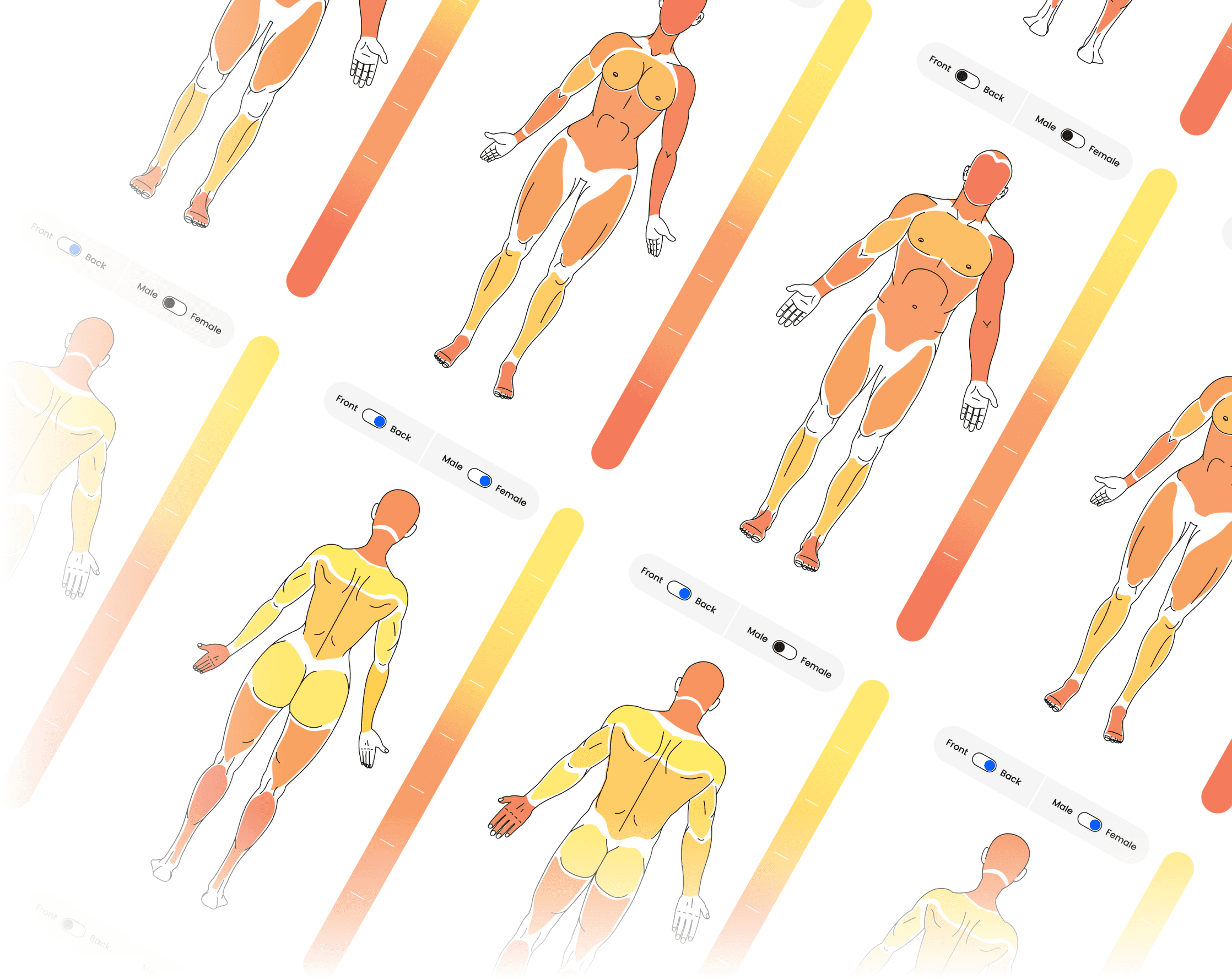
An intuitive body part filter design
An intuitive
body part filter design
Case Study
Jhaiho's
tattoo search
Jhaiho's
tattoo search
The observation
The observation
People searching for tattoo inspiration rarely know exactly what they want upfront. They start with a broad search like "hand tattoo" and end up going down a rabbit hole of artist references, styles, and body placement ideas. We started noticing this pattern in our platform data consistently.
People searching for tattoo inspiration rarely know exactly what they want upfront. They start with a broad search like "hand tattoo" and end up going down a rabbit hole of artist references, styles, and body placement ideas. We started noticing this pattern in our platform data consistently.
The research
The research
worked with the marketing and field team to get closer to the problem. We spoke with tattoo artists across Bengaluru and other cities in India. One insight came up repeatedly — clients walk in with a tattoo designed for one body part and ask to have it placed somewhere else entirely. In 60% of cases that simply does not work.
On the other side, tattoo seekers had a different but related problem. When browsing for inspiration, they could not easily filter by body part. Most did not know the correct anatomical terms to search for.
The insight
The insight
Both problems pointed to the same gap. There was no visual, intuitive way to say "show me tattoos for this part of my body." Text-based search was the wrong tool for a fundamentally visual and spatial problem.
That led to one question that shaped everything that followed: why can't users just click on the body part they want?
Both problems pointed to the same gap. There was no visual, intuitive way to say "show me tattoos for this part of my body." Text-based search was the wrong tool for a fundamentally visual and spatial problem.
That led to one question that shaped everything that followed: why can't users just click on the body part they want?
Ideation
Ideation
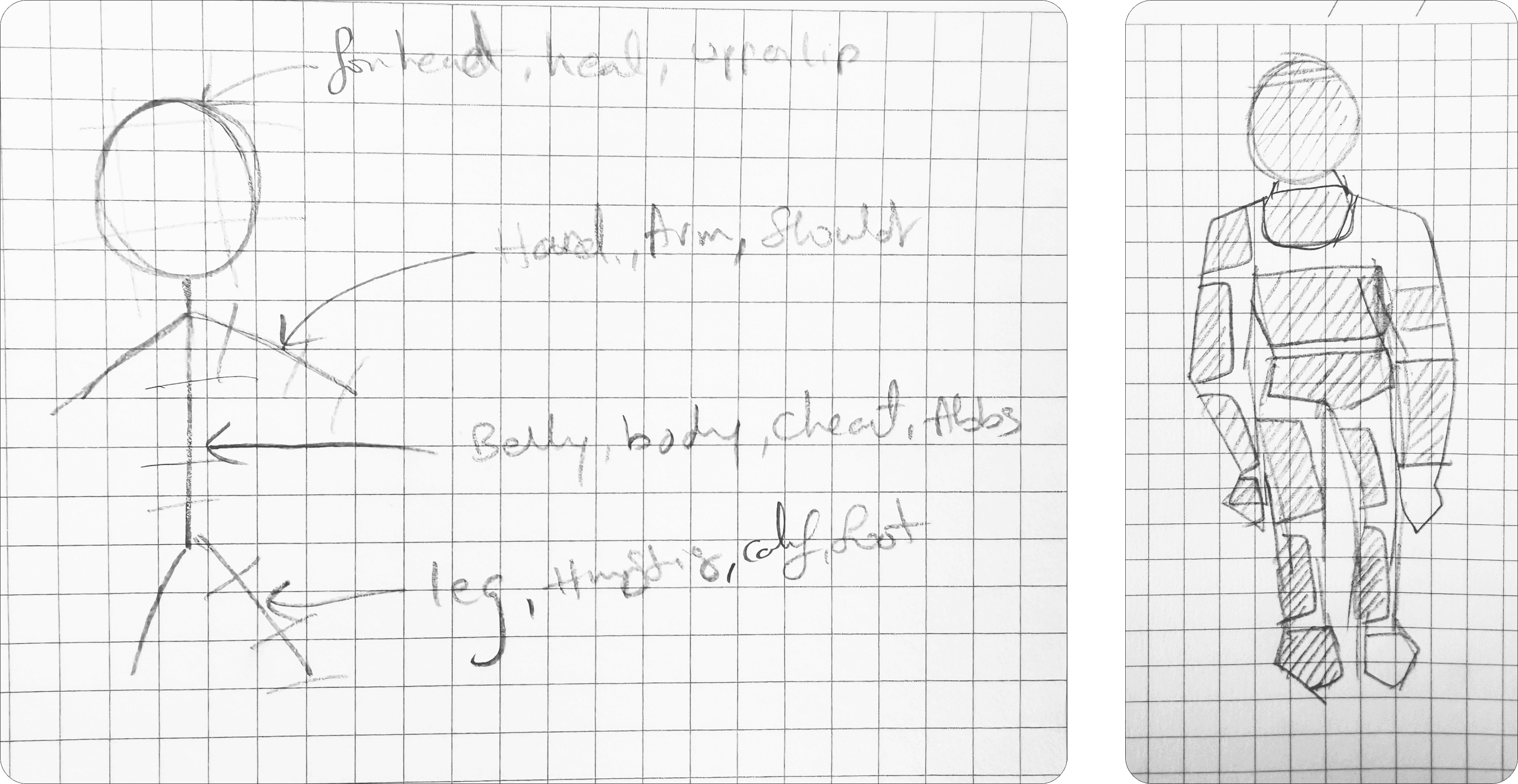
I started sketching during and after the field interviews. Quick drawings of a front and back human figure with selectable zones. The artists and enthusiasts in the room responded immediately. Seeing their reaction in those sessions confirmed the direction was right.
I started sketching during and after the field interviews. Quick drawings of a front and back human figure with selectable zones. The artists and enthusiasts in the room responded immediately. Seeing their reaction in those sessions confirmed the direction was right.
Initial prototypes and user testing
Initial prototypes and user testing
I built the first version in Figma and ran testing sessions with both tattoo artists and platform users. I brought in the front end development team early to work on a real working alpha version rather than a static prototype, which gave us much more honest feedback.
The response was unanimous. Users found the filter intuitive without any instruction. We started seeing artist reference accuracy in search results improve up to 80%.
I built the first version in Figma and ran testing sessions with both tattoo artists and platform users. I brought in the front end development team early to work on a real working alpha version rather than a static prototype, which gave us much more honest feedback.
The response was unanimous. Users found the filter intuitive without any instruction. We started seeing artist reference accuracy in search results improve up to 80%.
Iterative evolution
Iterative evolution
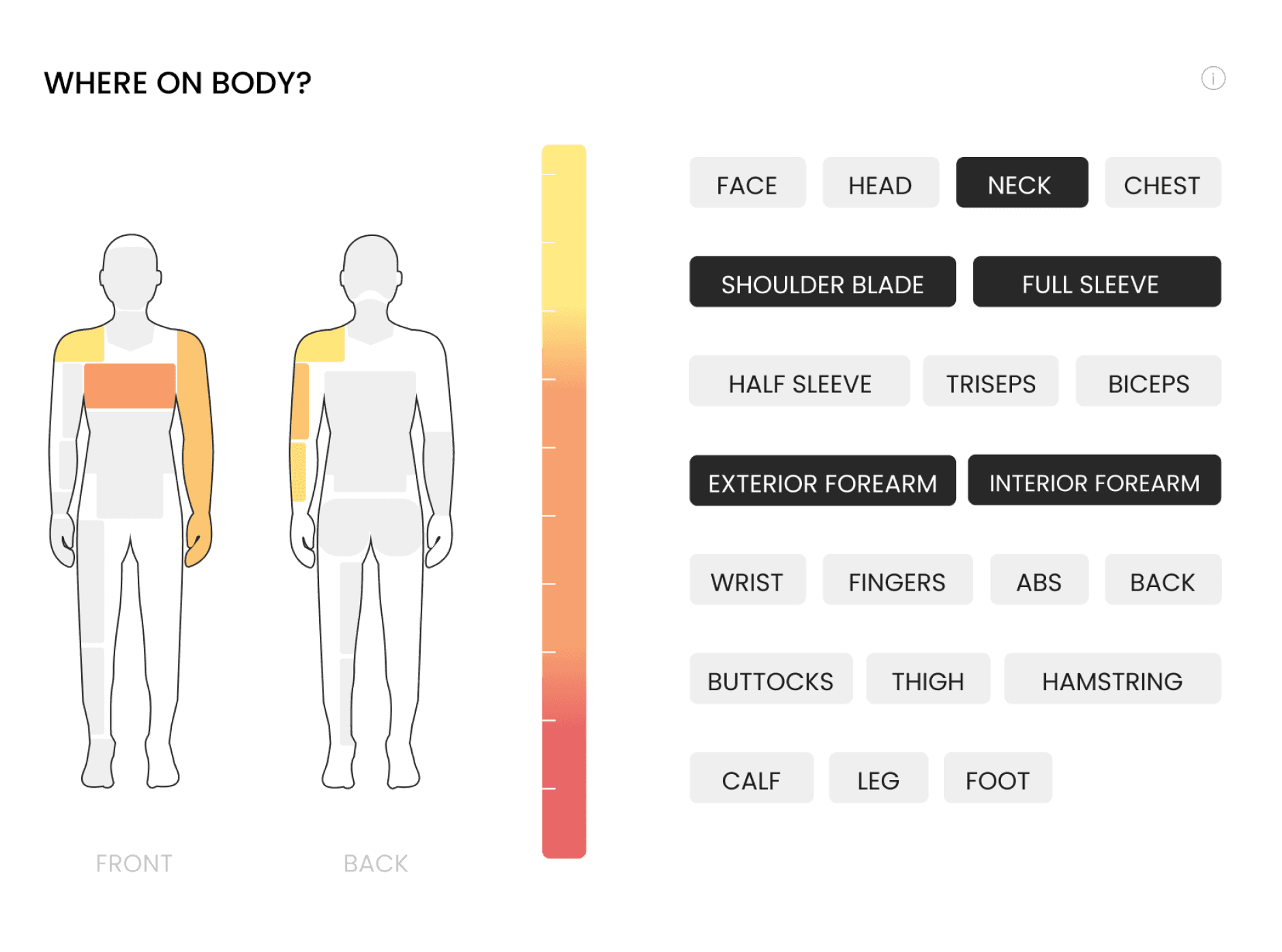
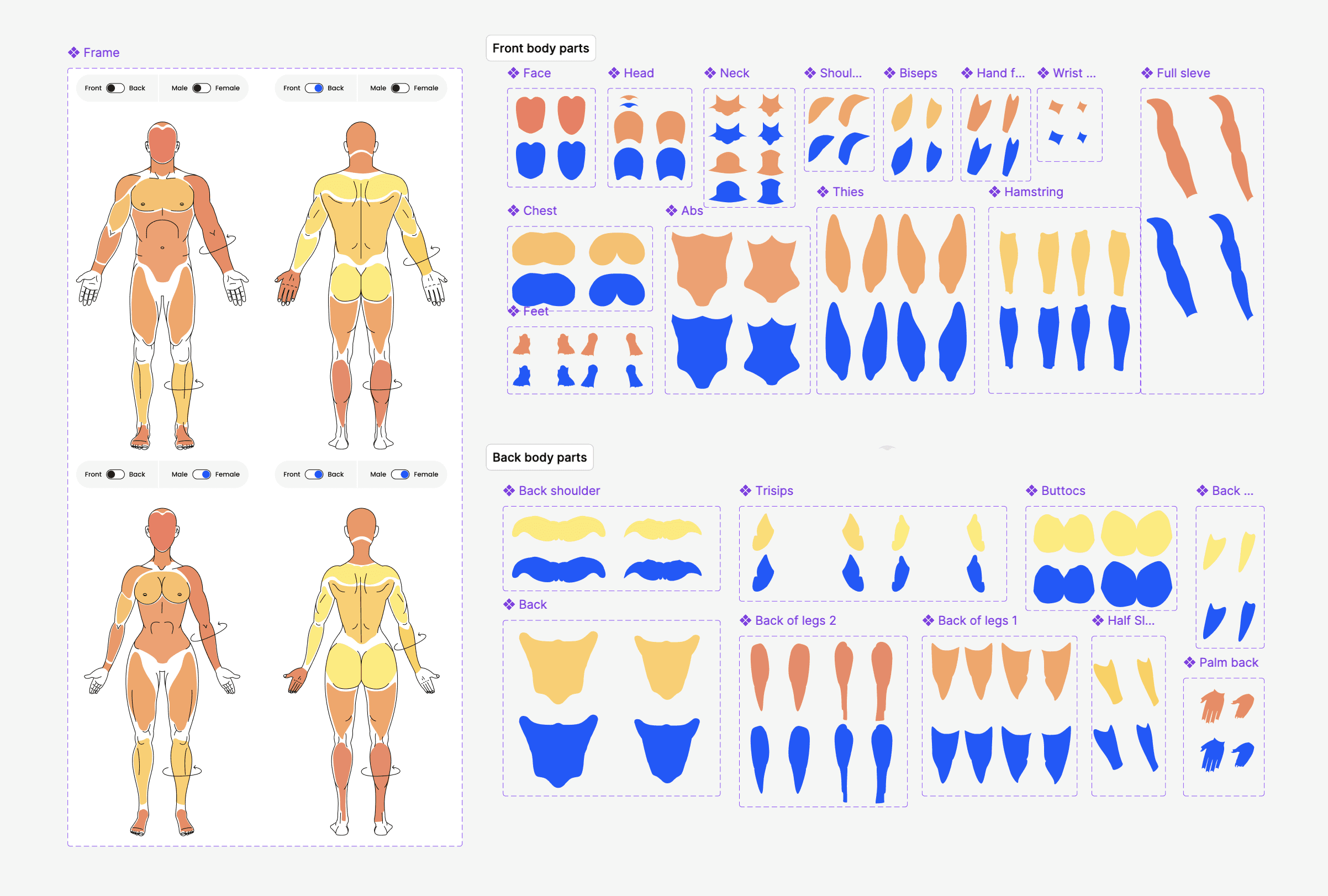
The filter went through several rounds of iteration based on testing feedback. Front and back body views, male and female variants, and granular zone selection across all major body areas. I designed the full component library in Figma which the dev team used directly for implementation.
The filter went through several rounds of iteration based on testing feedback. Front and back body views, male and female variants, and granular zone selection across all major body areas. I designed the full component library in Figma which the dev team used directly for implementation.
Outcome
Outcome
The body map filter shipped as a core feature of the Jhaiho platform. Search to artist reference accuracy improved by 80%. It solved a problem that was invisible in the data but immediately obvious once we spoke to the people using the product.
The body map filter shipped as a core feature of the Jhaiho platform. Search to artist reference accuracy improved by 80%. It solved a problem that was invisible in the data but immediately obvious once we spoke to the people using the product.


© 2025 Vinay Sagar. All Rights Reserved.